Questions & Answers
Public Questions & Answers
The Conversation Around Comset
These pages turn the business source material into practical answers, comparisons, visual examples and confirmation points for people researching this business.
No, and that catches people out regularly. A router may appear impressive on paper yet miss important Australian carrier bands or regional coverage requirements. Even when it connects, it may not perform as expected if the radio design, certification or supported frequency set is a poor match for local networks. Comset’s advantage is that the Australian carrier environment is part of the recommendation process. That makes the discussion far more useful th…
Australian Carrier Bands and Compatibility · 2026-07-22 Why does Band 28 keep coming up when people talk about rural and regional coverage?Band 28 matters because it is widely used for broader area coverage in Australia and often plays a big role in regional 4G performance. In plain English, support for that band can be the difference between a router that works where you need it and one that only looks good in the city. It is not the only band that matters, but it is one of the most practical compatibility checks. Comset tends to bring Band 28 into the conversation because it is tied to rea…
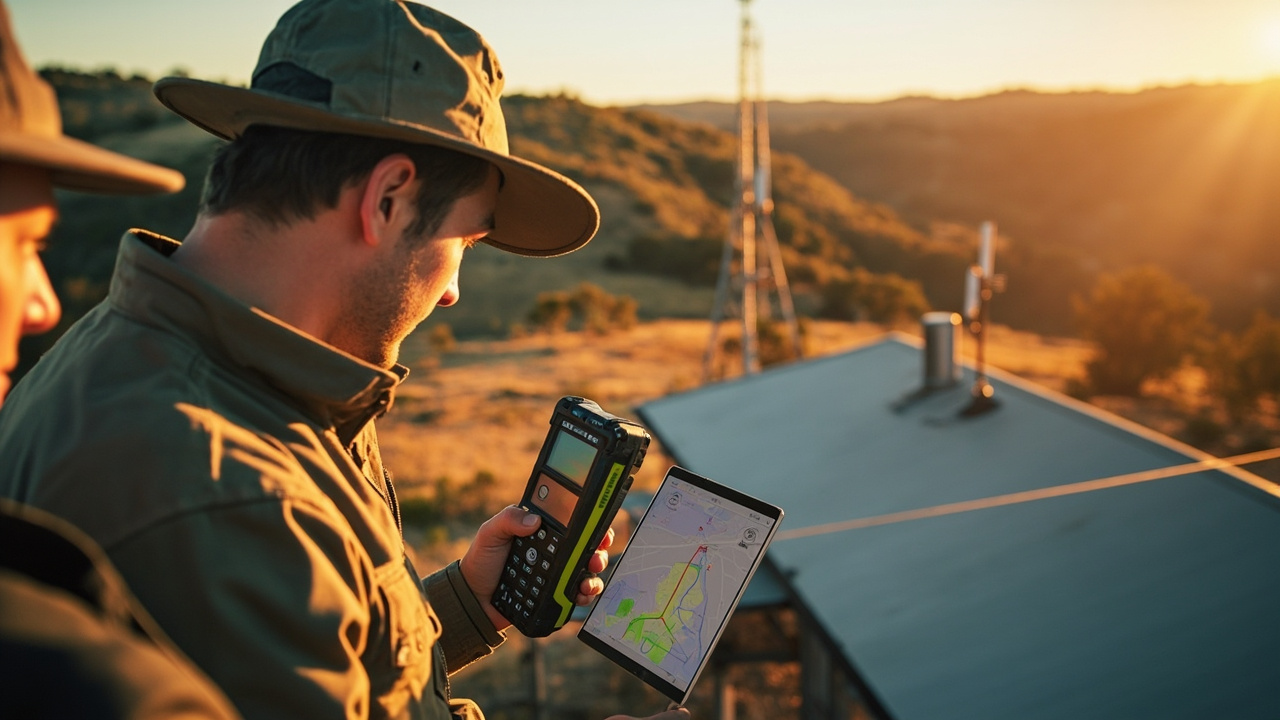
Cell Tower Location and Signal Testing · 2026-07-21 How do I work out the best side of a building for the antenna before drilling holes everywhere?The sensible way is to test before committing. Check signal quality, not just bars, from likely mounting points. Compare carriers where possible and pay attention to the practical path of the coaxial cable back to the router, because a brilliant signal location can be undermined by a long or lossy cable run. Comset’s cellular-tower and signal-testing guidance is useful here because good antenna placement is part radio planning and part common sense. The r…
 3 Q&A
Power over Ethernet Deployments
3 Q&A
Power over Ethernet Deployments
 5 Q&A
Cellular Antennas and MIMO
5 Q&A
Cellular Antennas and MIMO
 3 Q&A
Antenna Placement and Coaxial Cable Loss
3 Q&A
Antenna Placement and Coaxial Cable Loss
 12 Q&A
Cell Tower Location and Signal Testing
12 Q&A
Cell Tower Location and Signal Testing
 5 Q&A
Australian Carrier Bands and Compatibility
5 Q&A
Australian Carrier Bands and Compatibility
Phone bars are a rough indicator, not a proper network assessment. Routers and phones may support different bands, antenna arrangements and carrier features, and good-looking signal strength does not guarantee good quality, low interference or adequate upload performance. That is why more meaningful figures such as RSRP, RSRQ and SINR are often used when testing router performance. Comset normally treats a phone as a clue, not as the final authority. A si…
VPN Security and Private Connectivity · 2026-07-20 Do I need a public IP address to use VPN on a cellular router?Not always. Many mobile services use private addressing or carrier-grade NAT, which means the old habit of expecting inbound access on a public IP no longer tells the whole story. Some deployments use VPNs initiated from the remote router outwards, while others use managed remote-access methods that work around the lack of a public address. Comset generally looks at the end goal first: do you need a permanent site-to-site tunnel, occasional technician acc…
Wi-Fi Ethernet and LAN Design · 2026-07-19 How many Ethernet ports do I need before I should add a switch?If the device count is only slightly above the router’s available ports, adding a switch is often the simplest answer. The main thing is to think about growth, power, physical layout and whether different types of devices should be kept logically separate. A router is there to manage connectivity and policy; it does not need to be forced into every local-network job. Comset can help decide whether a four-port router is enough on its own or whether the cle…
 12 Q&A
Router Comparison and Model Selection
12 Q&A
Router Comparison and Model Selection
 8 Q&A
Machine-to-Machine and IoT Connectivity
8 Q&A
Machine-to-Machine and IoT Connectivity
 10 Q&A
Industrial Automation Connectivity
10 Q&A
Industrial Automation Connectivity
 3 Q&A
Building Automation Connectivity
3 Q&A
Building Automation Connectivity
 8 Q&A
Security and Surveillance Connectivity
8 Q&A
Security and Surveillance Connectivity
The safest answer is to use the router’s supported secure remote-access or VPN method rather than exposing open ports directly to the internet. The exact option depends on the router, the carrier constraints and the wider security policy, but the design should always be deliberate: authenticated access, clear user permissions and a manageable support process. Comset can usually steer the discussion towards secure remote access without turning the project …
Cellular Backup for NBN and Fixed WAN · 2026-07-18 Will EFTPOS, VoIP phones or remote desktop sessions notice when the internet changes from NBN to mobile backup?Some applications handle failover quietly, while others may briefly reconnect or re-establish sessions. That is normal, because the public-facing IP path can change when traffic moves from the fixed service to the cellular network. The important thing is whether the interruption is acceptable for the business process and whether the design has been tested under live conditions. Comset’s role here is usually to match the failover design to the application.…
Wi-Fi Ethernet and LAN Design · 2026-07-18 Can one Comset router connect cameras, computers and a separate Wi-Fi access point at the same site?Yes, provided the router has the right local interfaces and the LAN has been designed sensibly. In a smaller installation a router may directly connect a few wired devices and a Wi-Fi access point. In a busier installation it may be better to let the router handle the WAN side while a switch and dedicated access point deal with the local network. Comset normally treats that as a local-network design question rather than a SIM question. The number of Ether…
 3 Q&A
Mining Energy and Remote Sites
3 Q&A
Mining Energy and Remote Sites
 5 Q&A
Transport Fleet and Mobile Deployments
5 Q&A
Transport Fleet and Mobile Deployments
 6 Q&A
Marine and Vessel Connectivity
6 Q&A
Marine and Vessel Connectivity
 4 Q&A
Environmental and Agricultural Monitoring
4 Q&A
Environmental and Agricultural Monitoring
 13 Q&A
Router Setup APN and Configuration
13 Q&A
Router Setup APN and Configuration
That depends on the router’s failover rules and on how failure is detected. Some systems swap because the mobile connection drops outright. Others watch whether traffic can still reach a known destination, which is often more useful because a link can stay technically connected while being practically unusable. The transition may be quick, but the real question is whether the application can tolerate a short interruption while the router re-registers and r…
Cellular Backup for NBN and Fixed WAN · 2026-07-17 Can a Comset router automatically take over if my office NBN fails?Yes, that is one of the most common use cases. The router watches the primary WAN connection and can switch traffic to the mobile service when the fixed link fails. The details matter, though: the failover trigger, the return-to-primary behaviour and the way services recover can all affect how seamless the experience feels to users. For a straightforward office backup, Comset will usually want to know what services must keep running, how many users are in…
Dual SIM and Carrier Redundancy · 2026-07-16 Should I use two different carriers in a dual-SIM router, or can both SIMs be on the same network?Two different carriers usually provide the best redundancy, because the whole point of dual SIM is to reduce the chance that one carrier outage, congestion problem or coverage gap takes the site offline. Using two SIMs on the same network can still help with plan management or swap-over behaviour, but it does not give the same independence. Comset will normally ask which carriers work best on the site, whether the router is fixed or mobile, and how critic…
 8 Q&A
Firmware Diagnostics and Troubleshooting
8 Q&A
Firmware Diagnostics and Troubleshooting
 12 Q&A
Comset Supply Support Warranty and Resellers
12 Q&A
Comset Supply Support Warranty and Resellers
 14 Q&A
Choosing an Industrial Router
14 Q&A
Choosing an Industrial Router
 8 Q&A
5G Industrial Routers
8 Q&A
5G Industrial Routers
 19 Q&A
4G LTE and 4GX Routers
19 Q&A
4G LTE and 4GX Routers
Absolutely. 4G is still the right answer for a large number of Australian deployments. It remains well suited to backup internet, remote monitoring, alarms, telemetry, light CCTV and everyday business connectivity where the application does not need cutting-edge speeds. In many places the most important factors are still Band 28 support, good antenna design, stable failover behaviour and sensible remote management. Comset’s 4G range is relevant precisely …
4G LTE and 4GX Routers · 2026-07-15 What does 4GX actually mean in practical terms for a customer?In practical terms, 4GX usually refers to support for carrier capabilities such as Band 28 and improved LTE performance, particularly on Australian networks where that band is widely used for broader coverage. For the customer, the takeaway is not the marketing label itself but whether the router supports the bands and LTE category that suit the local network and the expected use. Comset generally treats 4GX as part of the compatibility conversation. If a…
5G Industrial Routers · 2026-07-14 Is 5G worth paying for if the site mostly sends small amounts of sensor data?Usually the answer depends on the life of the project rather than on hype. If the application is just sending small sensor packets, meter readings or status alarms, 4G often does the job very well. Paying extra for 5G only makes sense if there is another requirement hiding in the background, such as future expansion, higher device density, a faster upstream need, lower latency, or a desire to standardise new deployments on a current-generation platform. C…
 10 Q&A
Dual SIM and Carrier Redundancy
10 Q&A
Dual SIM and Carrier Redundancy
 3 Q&A
Outdoor Routers and Harsh Environments
3 Q&A
Outdoor Routers and Harsh Environments
 11 Q&A
Cellular Backup for NBN and Fixed WAN
11 Q&A
Cellular Backup for NBN and Fixed WAN
 3 Q&A
Load Balancing and Multi-WAN
3 Q&A
Load Balancing and Multi-WAN
 10 Q&A
Wi-Fi Ethernet and LAN Design
10 Q&A
Wi-Fi Ethernet and LAN Design
Yes, and that is often a sensible way to stage a project. Many businesses start by proving the application on 4G, then move selected sites to 5G if more speed, lower latency or higher capacity becomes worthwhile. The key is to avoid designing the installation in a way that makes the upgrade painful. Antenna type, cable choice, mounting positions, power supply and enclosure space should all be considered with the future in mind. Comset can help plan that p…
5G Industrial Routers · 2026-07-13 Will a 5G router always be faster than a 4G router in regional Australia?No. A 5G label does not magically create a stronger network. In metro or well-served areas a good 5G service can deliver higher throughput and lower latency, but in some regional locations the practical outcome is that the router spends most of its life on 4G fallback. The site survey, the local carrier and the antenna design still matter more than the sticker on the box. That is why Comset generally treats 5G as a deployment choice, not as a fashion acce…
Choosing an Industrial Router · 2026-07-12 I only need internet at a shed, workshop or small farm building. Do I really need an industrial router?Not every job needs the heaviest industrial platform, but many remote sheds and workshops do need something more robust than a domestic hotspot. The real questions are how reliable the connection must be, whether the unit will sit unattended, what temperature and dust levels are like, and whether the installation may need an external antenna or backup SIM. Once a router is expected to stay on all year, run cameras or monitoring devices, or survive a harshe…